Job Search Tips
Why Top Professionals Take Longer to Find a Job (And Why Rushing Your Search Could Cost You Six Figures)
October 23, 2026


There is an old rule of thumb in executive recruiting: the higher your compensation and specialization, the more selective the hiring funnel becomes.
If you are an entry-level generalist, there are thousands of open seats in any city, and the interview loop might take two weeks. But if you have a Senior Role, you aren't looking for a job. You are looking for the right role—one that matches your scope, career trajectory, and experience.
Finding that role takes time. Senior hiring loops regularly span 6 to 8 rounds, require sign-offs, and follow budget cycles.
Yet when an unexpected corporate restructuring or Reduction in Force (RIF) hits, even the sharpest six-figure professionals fall into the exact same trap: Cash-Flow Panic. And giving in to that panic can quietly cost you hundreds of thousands of dollars in lifetime earnings.
Imagine you own a beautiful home. If you decide to sell it on your own timeline, you stage it properly, wait for the right buyer, and walk away with top dollar.
Now imagine the bank tells you that you have 14 days to sell the house, or they’re shutting off the electricity. Suddenly, you aren't holding out for market value anymore. You’re hosting a fire sale—and the first buyer who walks through the door with a lowball offer is going to win.
Every single week, talented professionals accidentally run a "fire sale" on their own careers.
Why do high-performing professionals accept suboptimal job offers after a layoff? Because their monthly fixed burn rate doesn't pause while they wait for the right role to open up.
When you are staring at a $7,000 monthly cash-flow deficit, you lose your leverage at the negotiating table. To stop the bleeding in Month 2, many professionals take the first offer that comes along—accepting a 15% to 20% cut in base salary or stepping backward in title.
Do the math on a $180,000 earner who takes a rushed $145,000 offer just to pay the mortgage: over a three-year tenure (before factoring in compounded bonuses), that single rushed decision costs $105,000 in lost compensation.

But staying patient requires one critical ingredient: calm cash flow.
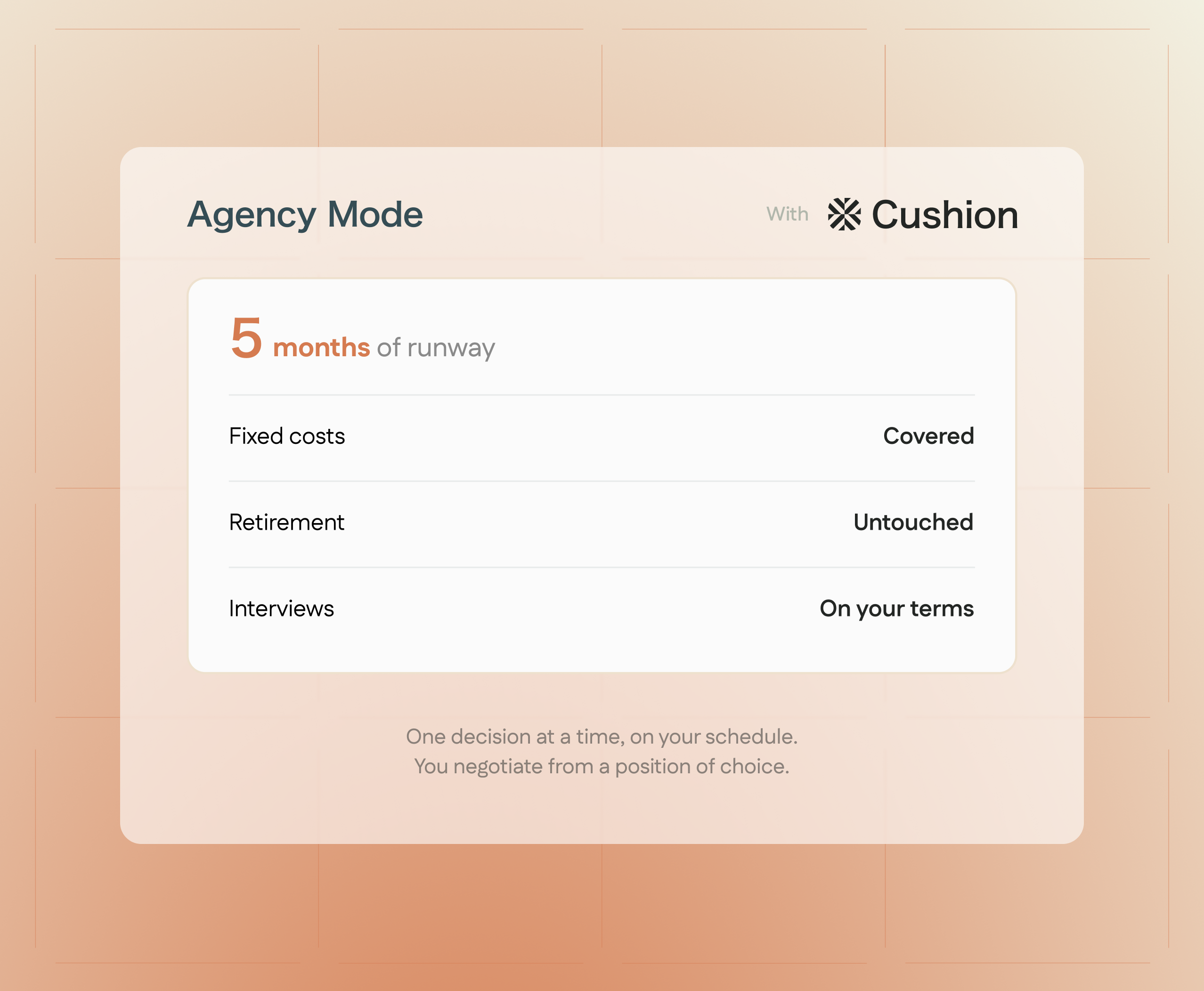
We built Cushion—Private Supplemental Involuntary Unemployment Insurance—to give established W-2 professionals the financial runway to command their true market value during a no-fault career transition.
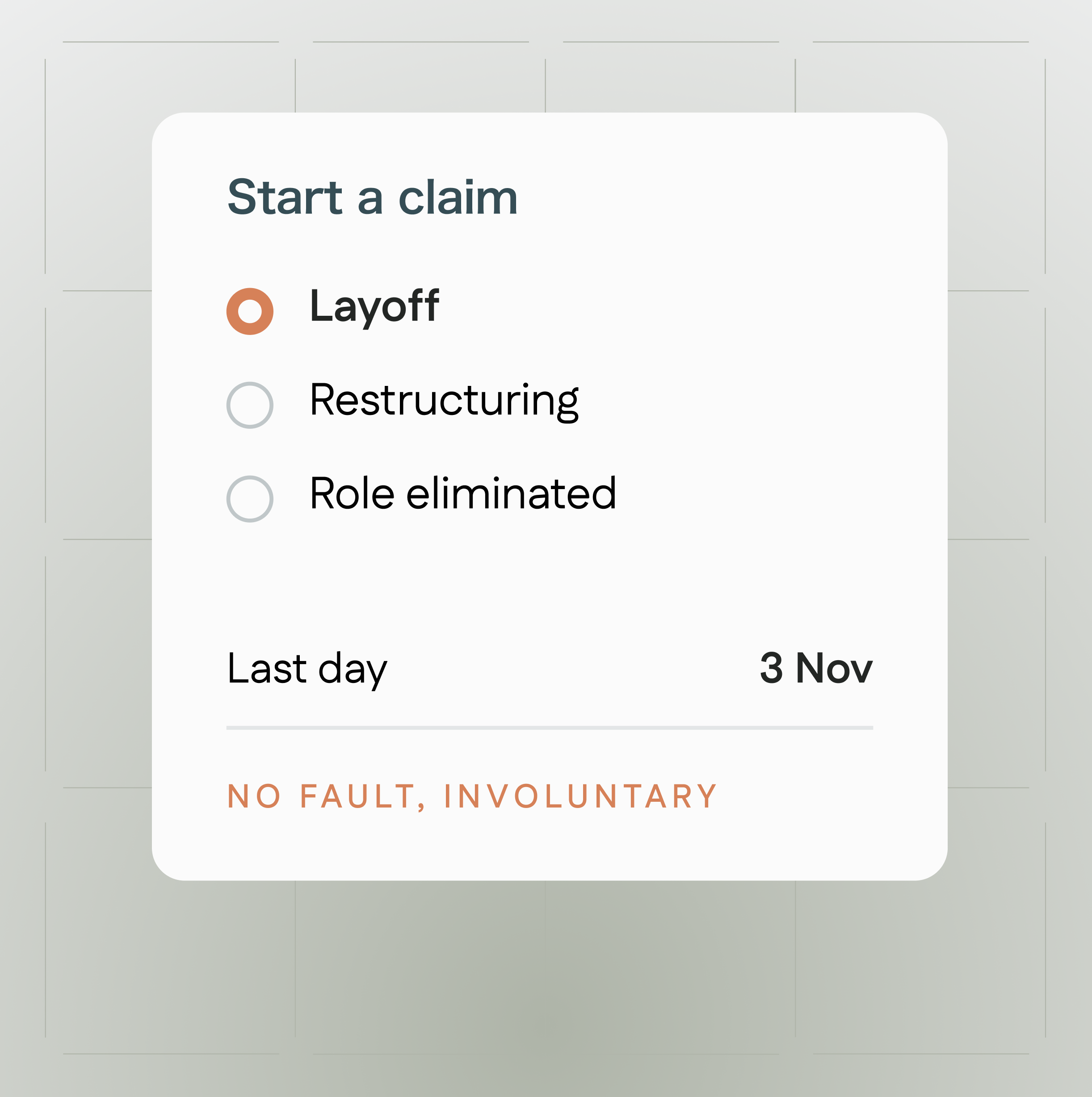
Cushion is engineered to do two things when you experience a qualifying no-fault layoff (after your initial 120-day policy vesting period):
To keep our member pool strong and avoid just-in-time buyers, prospective members must pass a confidential, API-driven Professional Audit (your employer receives zero notification) verifying full-time W-2 status, income requirements, and tenure.
Your career trajectory took years to build. Don't let a temporary gap in cash flow force you to sell your talent at a discount.