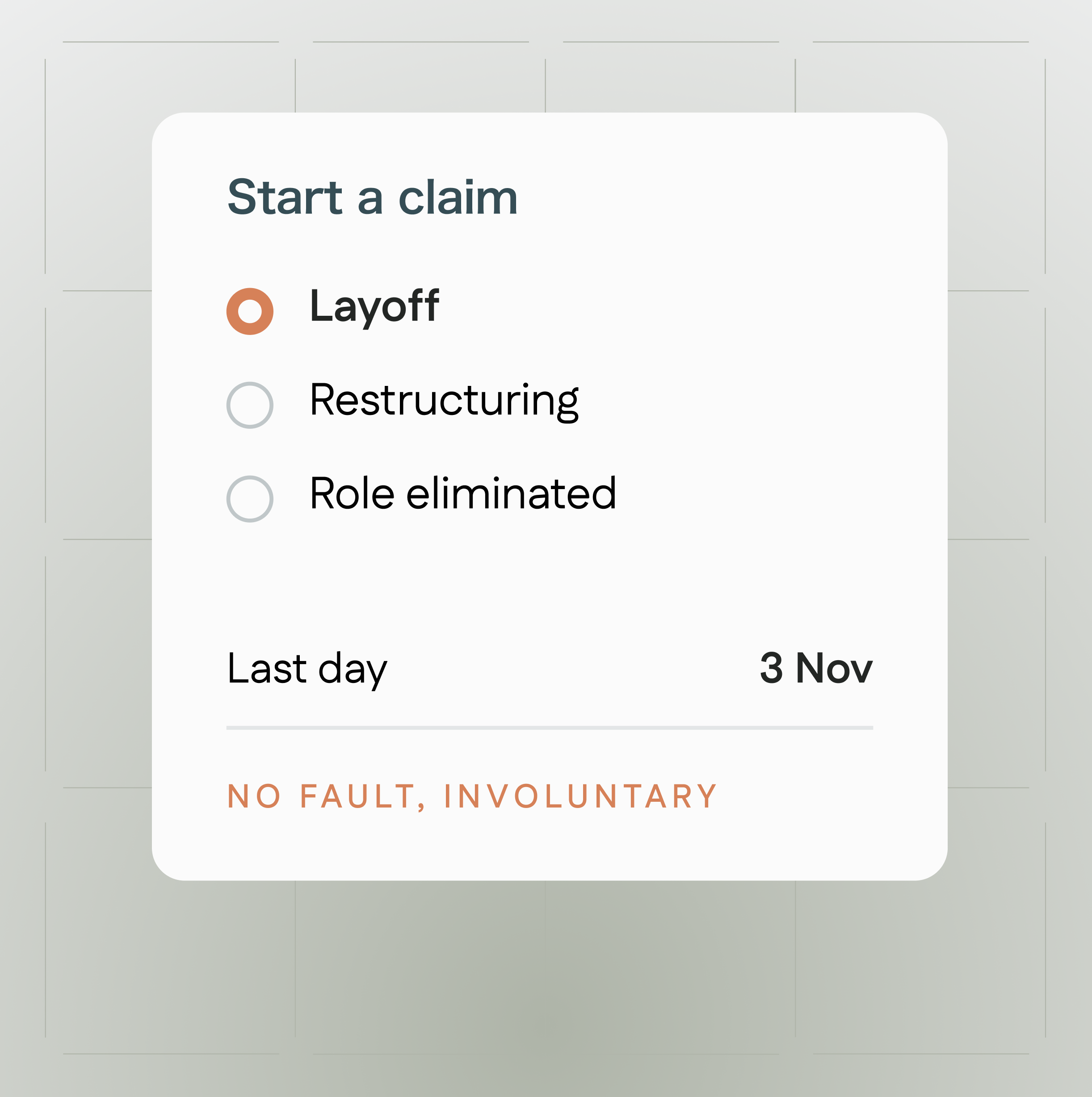
State Unemployment
Mind the Gap: Why State Unemployment Wasn’t Built for Modern Professionals (And How Cushion Bridges It)
October 23, 2026
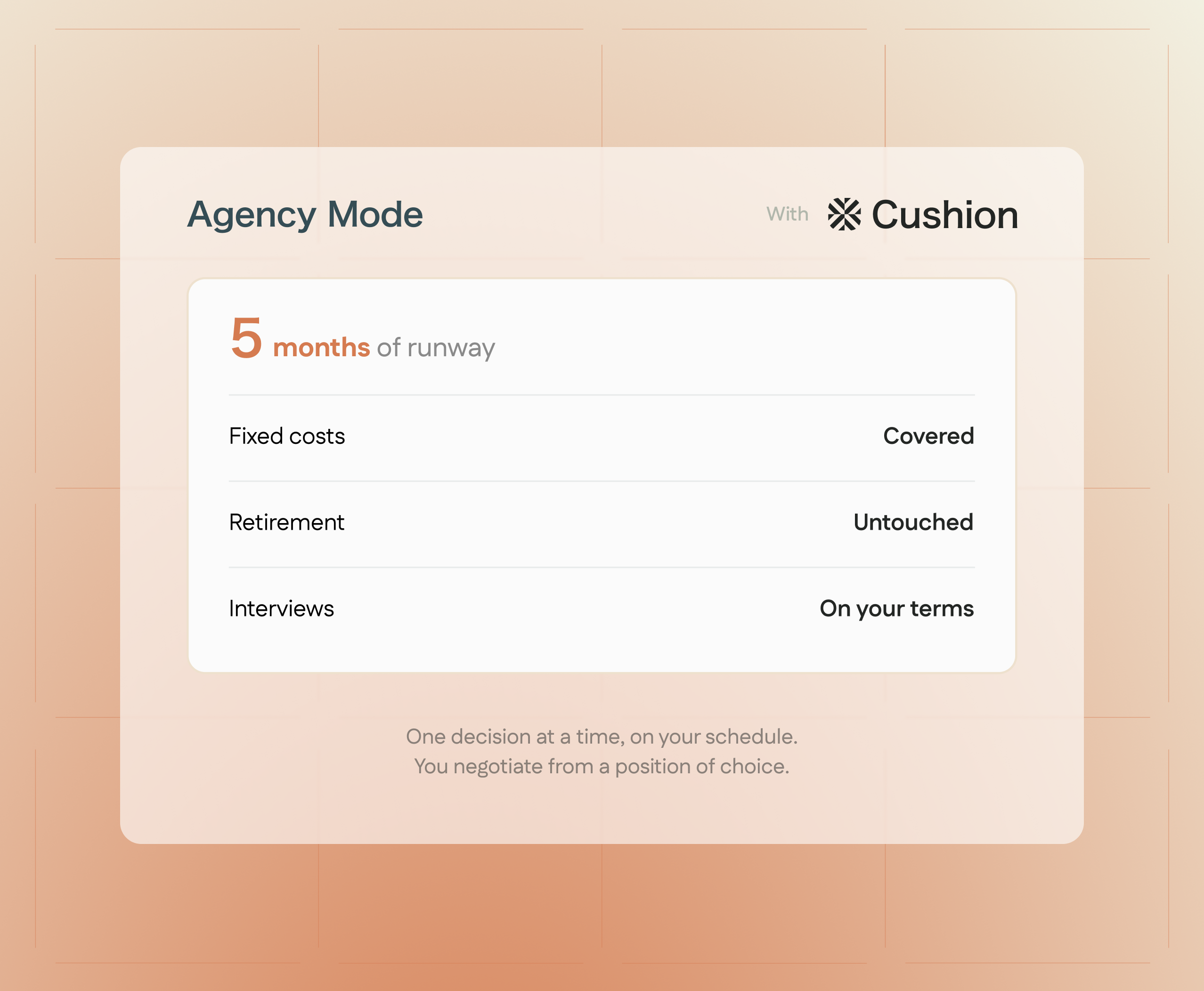

We insure our homes, our cars, our health, and even our cell phones. Yet the single asset that pays for every one of those things—our paycheck—is usually left sitting out in the rain with nothing more than a paper umbrella.
That paper umbrella is State Unemployment Insurance (UI).
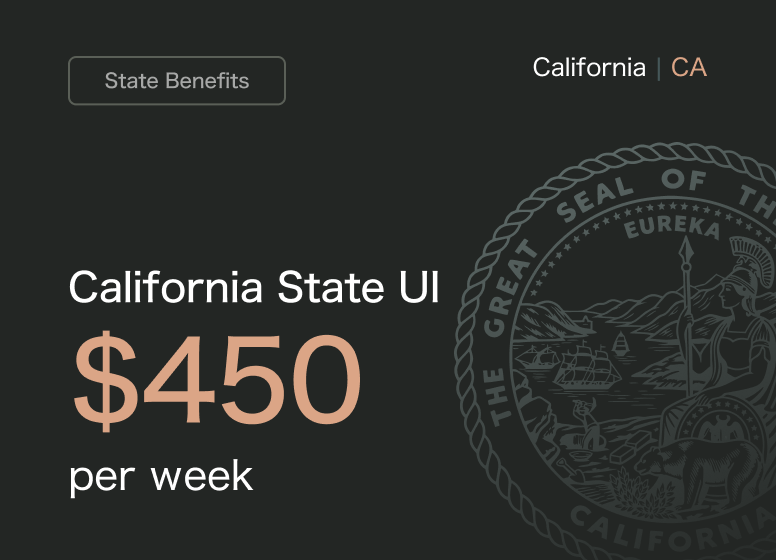
State unemployment was created during the Great Depression to make sure families could buy bread and milk. While the cost of homes in Denver, Miami, Chicago, and Northern Virginia has skyrocketed over the decades, state unemployment caps have remained virtually frozen in time.
State Unemployment UI isn't broken; it’s just doing the job it was built for Nearly a century ago: baseline poverty prevention. It was not engineered for the modern professional. That is why we built Cushion.
Think of State UI as the base fare that gets you on the plane, and Cushion as the upgrade that gives you actual legroom. If you earn $120,000 a year ($10,000/month), and your state pays you $1,500 a month during a layoff, you have an $8,500 hole in your budget. With Cushion, you can choose options designed to help cover 40%, 50%, or 60% of your gross income (up to $10,000/month for 2 to 5 months). Cushion simply calculates the difference between your state’s maximum payout and your chosen tier, and sends that fixed cash amount straight to your account.
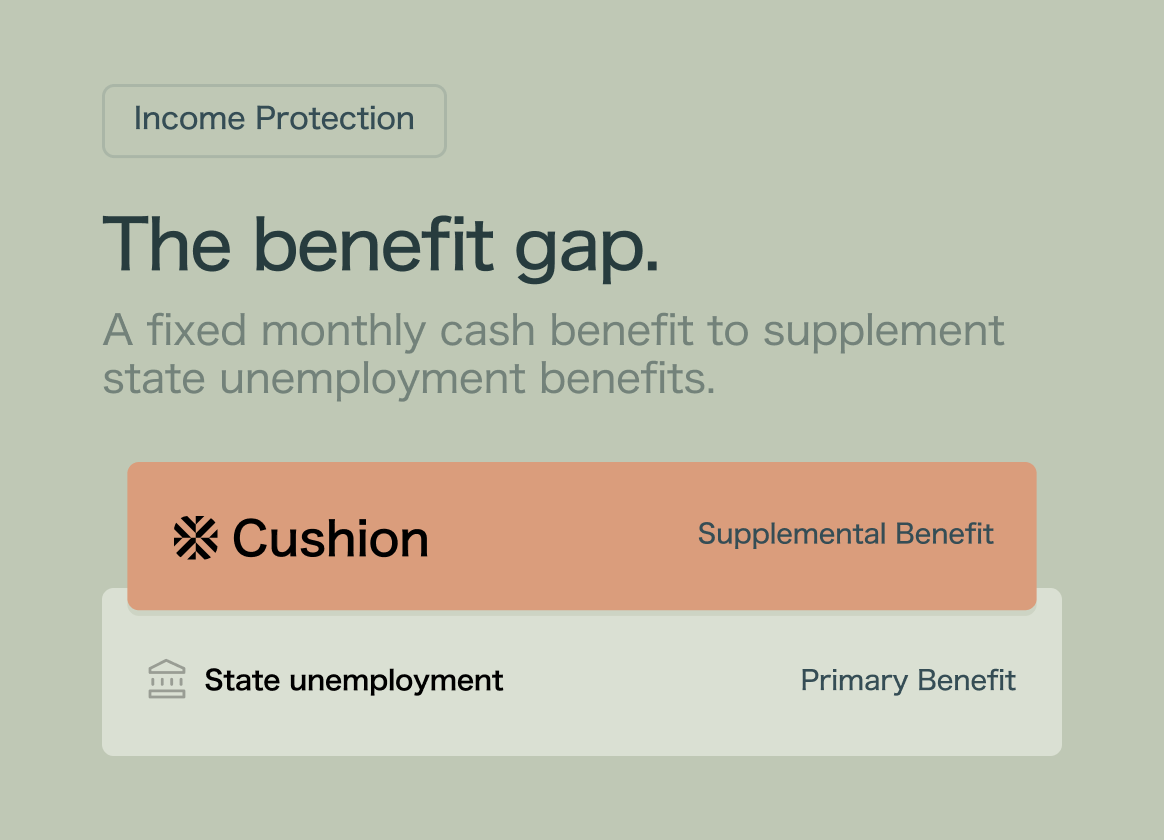
Cushion isn't meant to replace State UI—it piggybacks on top of it to help close your liquidity gap.
Imagine Alex, a Senior Product Manager in Austin, Texas, earning $150,000 a year ($12,500/month gross). Alex has a $3,800 mortgage, a car lease, and normal city living expenses.
No liquidating long-term brokerage accounts at a loss. No raiding the 401(k) and paying early withdrawal penalties. Just calm, predictable runway while Alex takes the time to land the right next role, not just the fastest one.
Because Cushion is built to protect a healthy pool of established professionals, membership requires meeting specific eligibility criteria including employment status, income and tenure at your current company. Every policy includes a 120-day vesting period before coverage activates—meaning you procure Cushion when the skies are clear, not when layoff rumors start swirling in the Slack channels.
You worked hard to build your lifestyle. Your income supports your home, your family, and your future. Cushion is designed to help you keep it moving forward, even when the job market takes an unexpected turn.